



Why Local Manufacturing Wins Government Energy Contracts
Across the developing world, governments are investing heavily in energy infrastructure. Solar projects, rural electrification programs, grid modernization initiatives, and utility-scale storage deployments represent billions in procurement spending annually.
But winning these contracts requires more than competitive pricing. Governments increasingly prioritize local manufacturing, local job creation, and local economic development when selecting suppliers. Companies that can demonstrate local production capability have a decisive advantage.
The Local Content Imperative
Governments use procurement policies to advance industrial policy objectives. If a government is spending public money on energy infrastructure, they want that spending to benefit the domestic economy—creating jobs, building technical capability, and developing local supply chains.
This manifests in local content requirements that specify minimum percentages of project value that must come from locally produced goods and services. A tender might require that 40% of the contract value be spent on locally manufactured equipment, with penalties for non-compliance.
For import-dependent suppliers, these requirements are disqualifying. No matter how competitive their pricing, they cannot meet local content thresholds if all equipment is imported.
Local manufacturers, by contrast, are positioned to win. Every dollar spent on locally assembled battery systems counts toward local content requirements. The economic multiplier effect of local manufacturing—jobs, taxes, supply chain spending—aligns with government objectives.

The ONESUN Advantage for Government Contracts
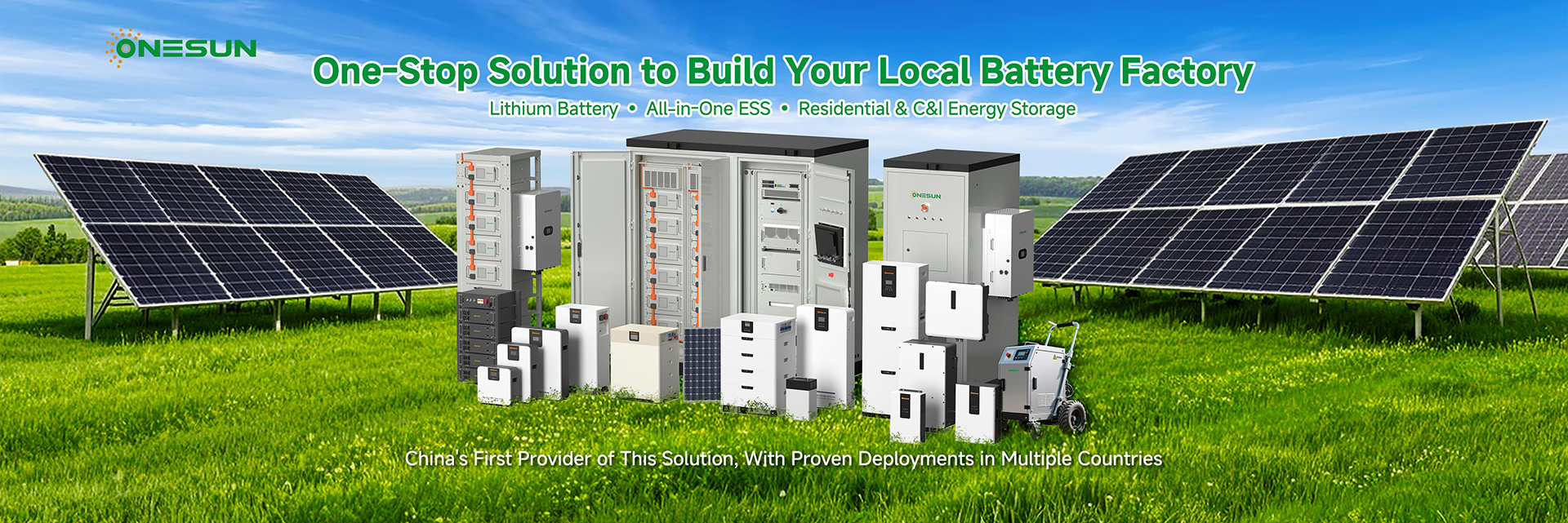
ONESUN’s agile factory model enables local partners to establish manufacturing capability that qualifies for government procurement. By assembling battery systems locally, partners can demonstrate:
Local production facilities with trained workforce
Local value addition through assembly and testing
Local service and support capability
Local supply chain relationships
These factors are often decisive in tender evaluations. When multiple suppliers meet technical requirements, the one that offers the greatest local economic impact wins.
Rural Electrification: A Growing Opportunity
Rural electrification represents a significant market for energy storage systems. Governments across Africa, Southeast Asia, and Latin America are working to extend grid access to remote communities where grid extension is economically impractical.
Solar home systems with battery storage have become the preferred solution for these applications. They can be deployed quickly, require no grid infrastructure, and provide reliable power for lighting, phone charging, and basic appliances.
But rural electrification programs often include local manufacturing requirements. Governments want the solar systems used in these programs to be assembled locally, creating jobs and building local industry. Companies that can offer locally assembled systems are preferred suppliers.
ONESUN’s PAYGO-enabled systems are specifically designed for this market . They incorporate remote monitoring and control capabilities that support pay-as-you-go business models, making solar power accessible to customers who cannot afford upfront payment. With local assembly, partners can offer these systems while meeting local content requirements.
Utility-Scale Storage Projects
As solar penetration increases, utilities are turning to energy storage to manage intermittency and maintain grid stability. Large-scale battery systems—from 1MWh to 100MWh and beyond—are becoming standard infrastructure investments.
These utility projects are typically procured through formal tenders with extensive qualification requirements. Suppliers must demonstrate manufacturing capability, financial stability, technical expertise, and local service capacity.
ONESUN’s 5MWh containerized storage systems are designed for utility applications. They integrate Grade A LiFePO₄ cells with comprehensive BMS and thermal management, packaged in standardized containers for rapid deployment. With local assembly capability, partners can offer these systems as locally manufactured products, meeting tender requirements that exclude pure importers.
Building the Credibility to Win
Winning government contracts requires more than technical capability. It requires credibility—the demonstrated ability to deliver large projects reliably, maintain quality standards, and provide ongoing support.
ONESUN’s track record supports partner credibility. With over 3GW of cumulative project deliveries and exports to more than 70 countries, we have the experience that government procurement officers look for . Our UN38.3, CE, and other certifications confirm that our products meet international standards.
When you partner with ONESUN, you can present yourself as the local manufacturing arm of a global energy storage company—a positioning that carries weight with government evaluators.
First-Mover Advantage
In most markets, the shift toward local manufacturing for energy storage is just beginning. The first companies to establish local production capability will capture the most attractive government contracts, building reference projects that position them for future opportunities.
Later entrants will find the landscape more competitive, with established players holding the relationships and track records that matter in procurement decisions. By moving now, you can secure the position that others will be competing for in three to five years.